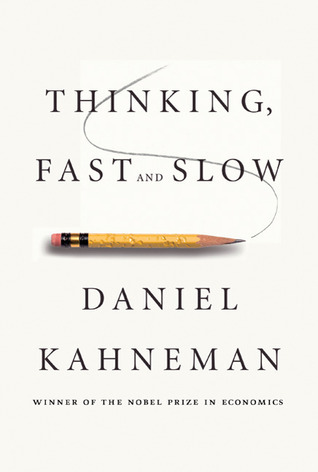
Thinking, Fast and Slow
by Daniel Kahneman
Thinking, Fast and Slow — Core Ideas
The Two Systems
Daniel Kahneman introduces two modes of thought that govern our decisions:
- System 1: Fast, automatic, intuitive, emotional. It operates effortlessly and quickly, with little sense of voluntary control.
- System 2: Slow, deliberate, analytical, logical. It allocates attention to effortful mental activities, including complex computations.
Most of the time, System 1 runs the show. System 2 is lazy and only kicks in when System 1 encounters something it can't handle.
Key Concepts
Cognitive Biases
- Anchoring: Our judgments are heavily influenced by the first number or piece of information we encounter.
- Availability Heuristic: We judge the probability of events by how easily examples come to mind.
- Loss Aversion: Losses loom larger than gains. Losing $100 feels worse than gaining $100 feels good.
- Framing Effect: The way a problem is presented dramatically affects the choices we make.
Prospect Theory
Kahneman's Nobel Prize-winning work with Amos Tversky shows that people don't evaluate outcomes in absolute terms — they evaluate them relative to a reference point. We are risk-averse when it comes to gains but risk-seeking when it comes to losses.
The Planning Fallacy
People consistently underestimate the time, costs, and risks of future actions while overestimating the benefits. This is why projects routinely go over budget and past deadline.
WYSIATI — What You See Is All There Is
System 1 excels at constructing the best possible story from the information available to it — even when that information is severely limited. We jump to conclusions based on incomplete data.
Practical Applications
- Slow down important decisions: When the stakes are high, engage System 2 deliberately.
- Use checklists: They counteract cognitive biases by forcing you to consider factors you might overlook.
- Pre-mortem analysis: Before starting a project, imagine it has failed. Then work backward to identify potential causes.
- Reference class forecasting: Instead of building up estimates from scratch, look at similar past projects for realistic baselines.
Key Takeaways
- We are not as rational as we think. Understanding our biases is the first step to better decisions.
- Intuition is powerful but unreliable in complex, unfamiliar situations.
- Good decision-making requires knowing when to trust your gut and when to slow down and analyze.
Who Should Read This
Anyone interested in understanding how the human mind works — especially leaders, investors, educators, and curious lifelong learners.